
I Tested Every Thermometer in My House on a Feverish Toddler – Only One Didn’t Wake Her
A skeptical mum’s honest report on the no-contact thermometer that outscored gadgets costing fifty times more – and why it now lives on my changing table instead of in the drawer of shame.
The 3 a.m. question every parent knows
It’s a Tuesday night in February. My daughter Emma, two and a half, finally fell asleep at eleven after an evening of glassy eyes and a suspiciously warm forehead. At 2:40 a.m. I’m standing over her cot with one question burning through my sleep-deprived brain: fever, or just a warm duvet?
Here’s what my options looked like that night. The glass stick thermometer – accurate, sure, if you can pin a feverish toddler still for minutes at a time. You can’t. The under-the-arm method runs low and turns into a wrestling match. The ear thermometer needs the right angle, a fresh disposable cap, and a child who doesn’t mind being handled at 3 a.m. Miss the angle and the number is off. Run out of caps and the device just sits there.
So I did what I’d done a dozen times before: I put the back of my hand on her cheek, guessed, and lay awake until five wondering if I’d guessed wrong.
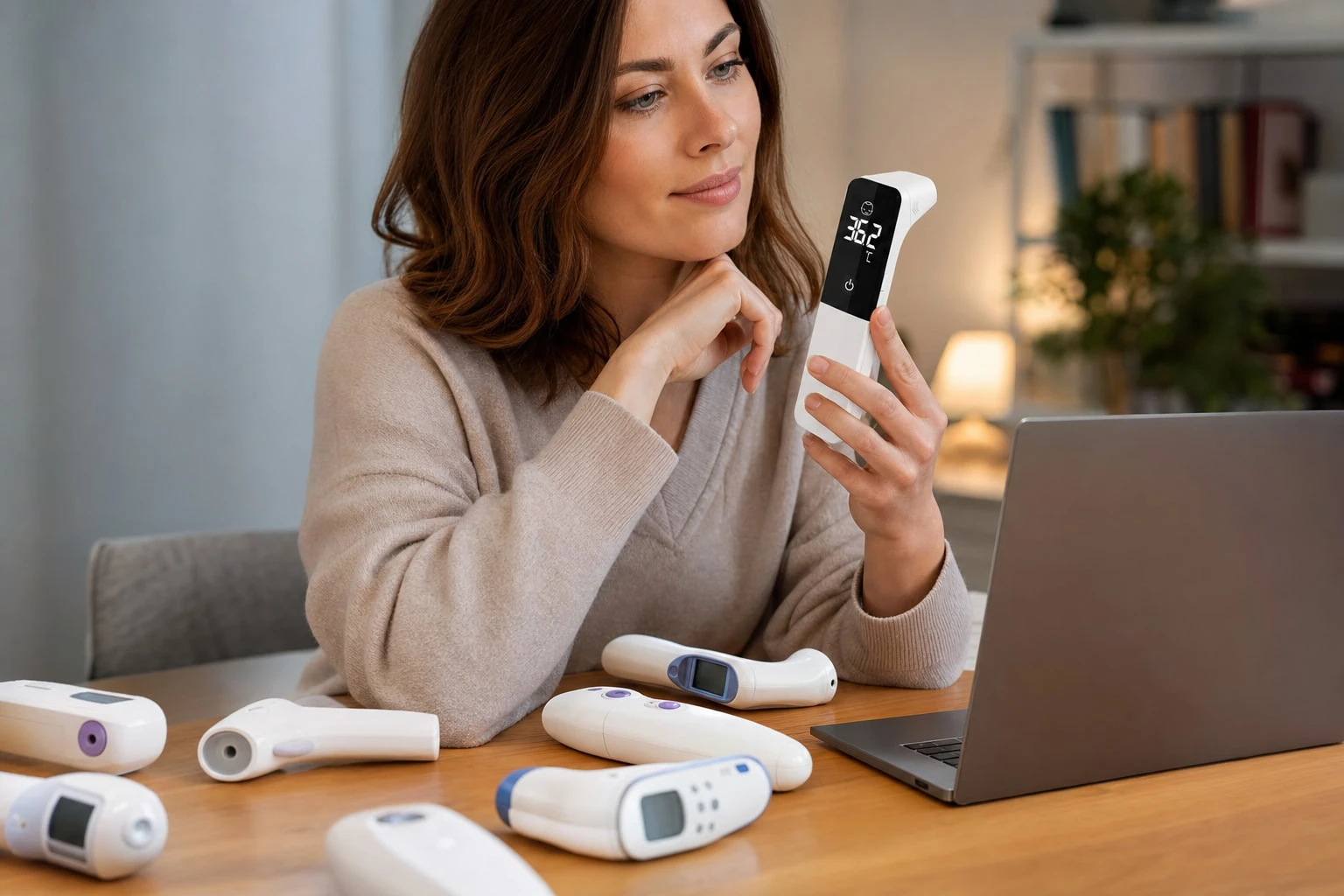
That week I pulled every temperature gadget we owned out of the drawer and lined them up on my desk. Four devices, three years of purchases, and not one of them could answer a simple question without waking a sick child. The cheap infrared guns I’d ordered online were the worst offenders – they flashed a different number every single scan and drifted further with every battery change. Does my child have a fever? With those things, it was a coin toss.
And don’t get me started on the bottle test. Dribbling milk on your wrist and calling it science – is that really how we check what a baby drinks in 2026?
What I actually needed – and what I found
I wrote my wishlist on a sticky note: reads a forehead without contact, gives a number in about a second, works in a dark room, checks bottles and bathwater too, and doesn’t cost three figures. Then I went looking.
A comparison site had just put five infrared devices head to head – everything from a €2,500 professional thermal camera down to the classic pharmacy ear thermometer. The device that won wasn’t the most expensive one. It was the cheapest one: the Inframeter XT, a no-contact infrared thermometer that took the top spot with a 9.8 editorial value rating – precisely because it was built for the job parents actually have, not for inspecting buildings.
I was skeptical. My drawer of shame was full of infrared promises. But the maths of the offer – half price, shipped from an EU warehouse within 24 hours on working days, and a 30-day money-back guarantee – meant the worst case was a full refund and a lesson learned. I ordered one.
How it works (and why it’s different)
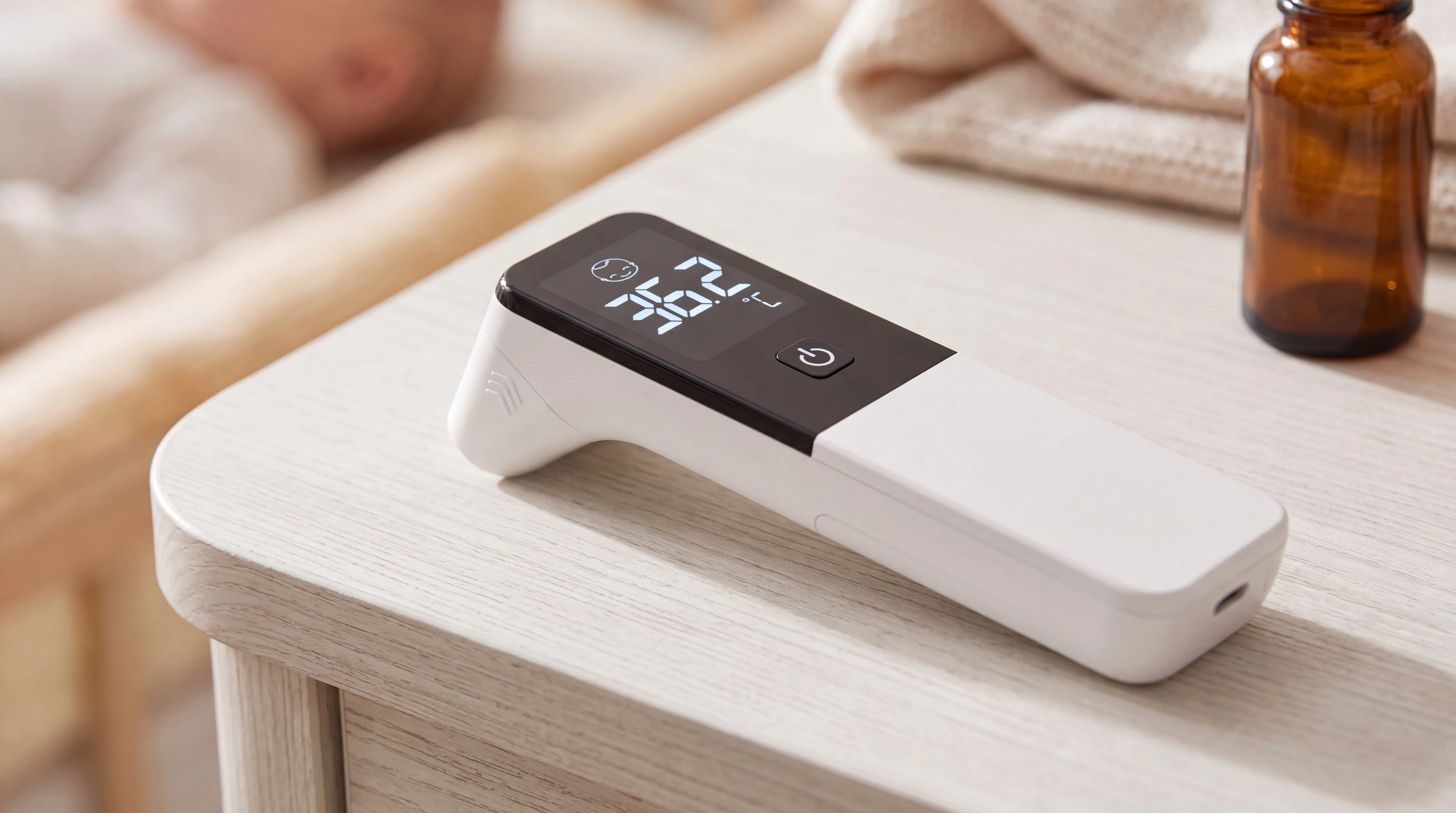
The Inframeter XT is a non-contact infrared thermometer: it reads the heat your body naturally gives off. Point it at the forehead from a few centimetres away, press once, and the result appears in under a second on a bright LED display. No probe, no caps, no contact – and crucially, no waking anyone.
What separates it from the no-name guns I’d already been burned by came down to six things I noticed in my first two weeks:
Sub-second readings you can act on
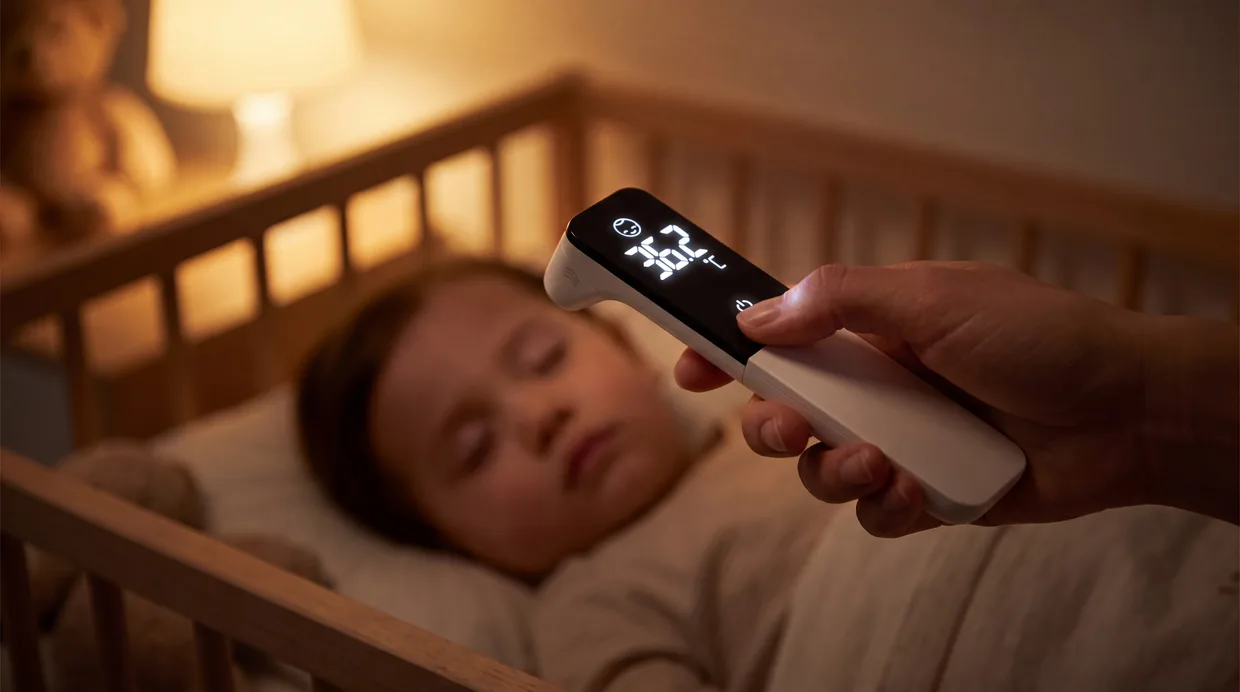
Press, read, done – before a sleeping child even stirs. During Emma’s rough night I took readings at eleven, at one, and at three. She never moved.
Truly no-contact fever checks
No touching, no waking, no wrestling. You stay a few centimetres away, which also means less contact when someone in the house is contagious.
Dual modes: one switch, two jobs
Flick from body mode to object mode and the same sub-second scan reads milk, porridge or bathwater. This is the feature I now use most – the wrist test is officially retired in our house.
Consistent, highly accurate results
Scan after scan, the same forehead gives the same number. That consistency is exactly what my bargain-bin infrared guns never delivered – and it’s what lets you measure once and move on.
A 20-reading memory that tells the real story
The XT stores your last 20 results. By morning I could see Emma’s numbers trending down overnight – context a single midnight reading never gives you.
Bright display, zero thinking required
The LED display is readable in a pitch-dark bedroom without switching on a light, and auto power-off means it shuts itself down to save battery. Fourteen days in, it was still ready every time I grabbed it.
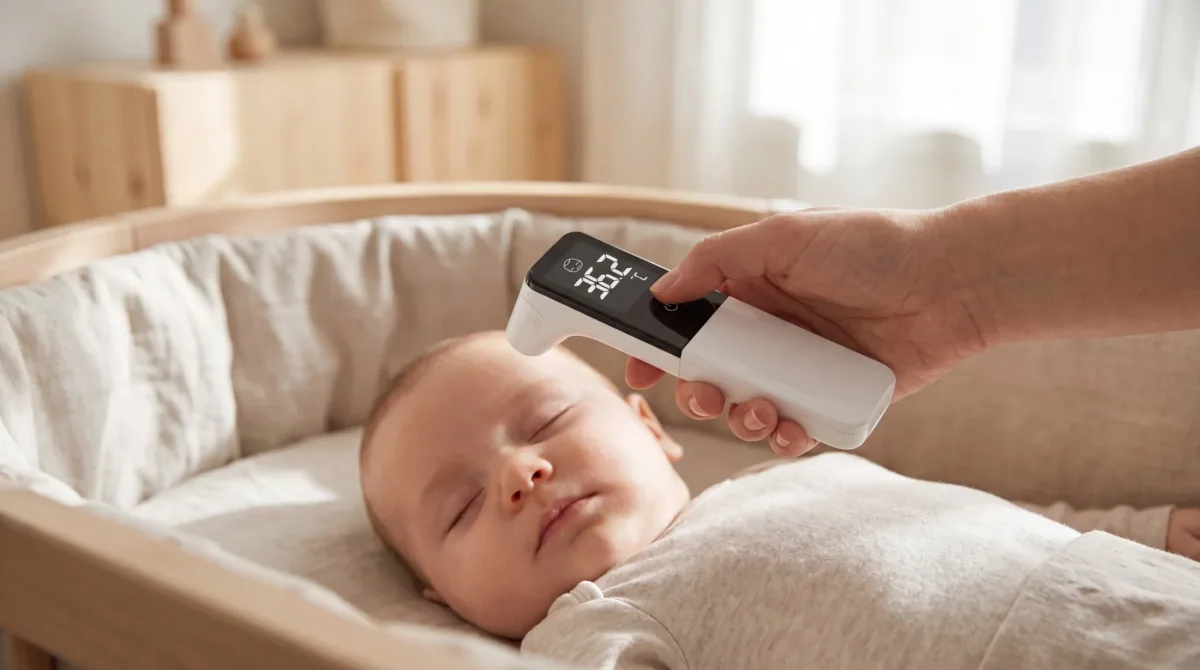
That photo is the moment it earned its place. First proper test, one press, a clear number, and a toddler who slept straight through it. I stood there slightly stunned – this was the thing four other gadgets had failed to do.
The feature nobody told me I’d love: object mode
I bought the Inframeter XT for fevers. I use it for everything else, too.
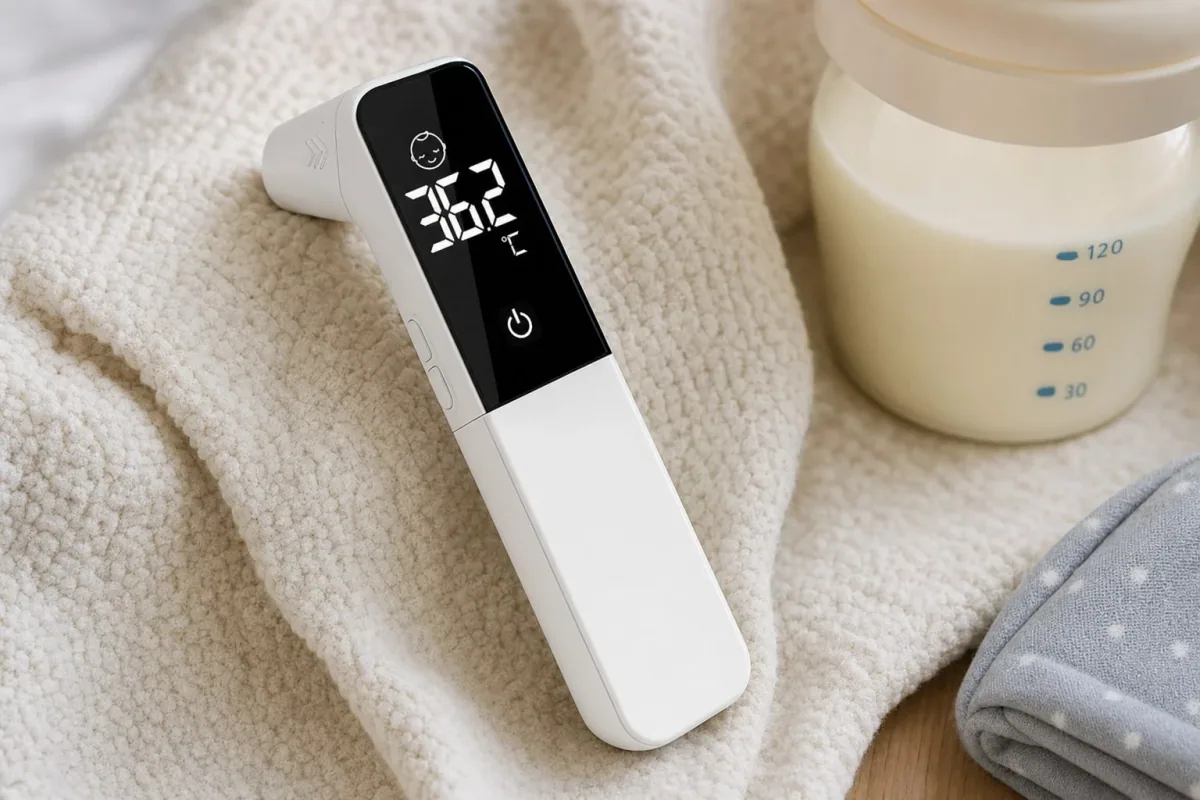
Morning bottle out of the warmer – point, click – a real number instead of a dribble on my wrist and a shrug. Porridge that’s been microwaved to lava – point, click – wait two minutes, check again. Bathwater – point, click – and the elbow ritual is retired for good. One device living on the changing table now handles jobs we previously solved with folklore.
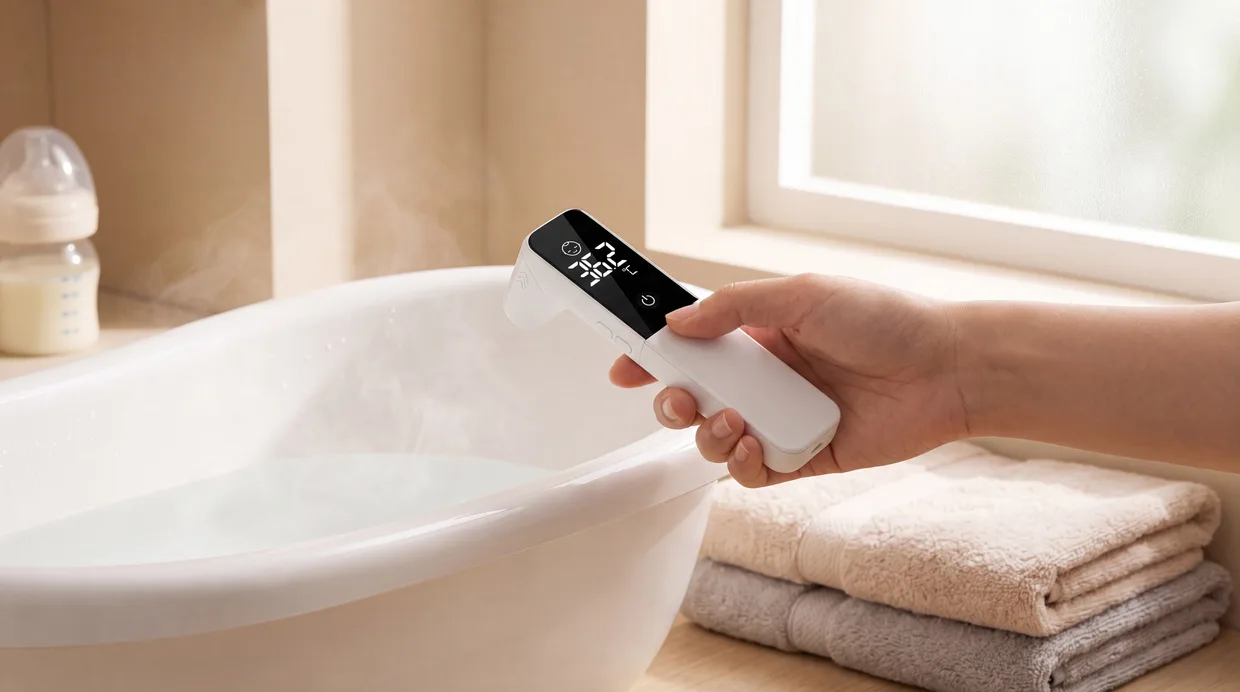
And it never once asked me to install, pair or configure anything. There is no app. At first I thought that was a limitation; two weeks in, I think it’s the point. A device used mostly between midnight and six in the morning has one duty above all: don’t make me think. The XT gets this completely.
What other parents say
“We had three thermometers and zero trust in any of them. This one gives my son’s forehead the same reading three scans in a row, which none of the others ever managed. The night display is the best part – I check on both kids without turning on a single light.”
Sofie M.
“Bought it for the baby, but honestly the object mode won me over. Bottle, bath, even the food when it comes out of the microwave too hot. My wife laughed at me for ordering another thermometer. She uses it more than I do now.”
Daniel R.
“My daughter screams at the ear thermometer. Screams. With this one she doesn’t even wake up. I checked her fever five times through one bad night and the memory showed me the whole curve in the morning. Should have bought it a year ago.”
Ilona K.
Fair questions I had before ordering
Can a no-contact reading really be trusted?
That was my biggest doubt, given my drawer full of failures. The difference is consistency: the XT gives the same forehead the same number scan after scan, which is what tells you the sensor is doing its job. In two weeks of daily use – including one genuinely miserable night – I never caught it contradicting itself.
How does it read a temperature without touching skin?
It measures the infrared heat the body naturally emits. Point it at the forehead, press once, and it converts that heat signature into a temperature reading in under a second, shown on the bright LED display. The same sensor handles object readings – that’s the dual-mode design.
Is it complicated to use when you’re half asleep?
There’s exactly one decision to make: body or object. One switch, one button, one clear number. No pairing, no app, no menus. If you can operate a light switch at 3 a.m., you can operate this.
What about batteries and running costs?
No disposable caps to keep rebuying, no consumables at all. Auto power-off protects the battery by shutting the device down after use. Compare that with ear thermometers that quietly commit you to buying lens caps forever.
What if it isn’t for me?
Orders are dispatched within 24 hours on working days from the brand’s own EU warehouse, and a 30-day money-back guarantee applies: contact customer service within 30 days of purchase and you get a full refund. No forms to argue over, no store-credit games. That guarantee is what turned me from skeptic to customer.
The one honest drawback
The 20-reading memory lives on the device only – there’s no app or export, so if you want records beyond 20 entries, that’s still pen and paper. For me it’s a fair trade: the total absence of apps, accounts and pairing is exactly why the XT works at 3 a.m. when nothing else in my life does.
Let’s talk about the price
Here’s the part that made my skeptical brain sit up. The professional thermal camera in that comparison costs €2,500 and cannot take a fever reading. The pharmacy-brand ear thermometer costs more than the XT and keeps charging you for caps. The Inframeter XT is €49.99 right now – exactly half the regular price of €99.99, a 50% discount verified live at the official checkout, with free shipping.
You pay for exactly the features a household uses – the sub-second sensor, the dual modes, the memory, the bright display – and not a cent for imaging hardware, app ecosystems or consumables a family never touches. Thousands of Germans have already ordered theirs, and demand in Germany has been strong since the comparison ranked it #1 of 5.
My verdict, six months of nights later
The Inframeter XT is the only gadget I’d describe as bought once, used daily. Fevers, feeds and bathtimes – the job most homes actually have – it covers all of them faster and with less fuss than anything else I’ve handled, at a fraction of what I’d already wasted on devices that didn’t work.
One warning: the 50% offer is set by the seller and can change without notice. It was live at my latest check, but if the price matters to your decision – and at €49.99 instead of €99.99, it should – confirm it’s still running before you order. With dispatch within 24 hours on working days and a full month to change your mind under the money-back guarantee, the risk sits entirely with them, not you.
Your 3 a.m. self will thank you.